

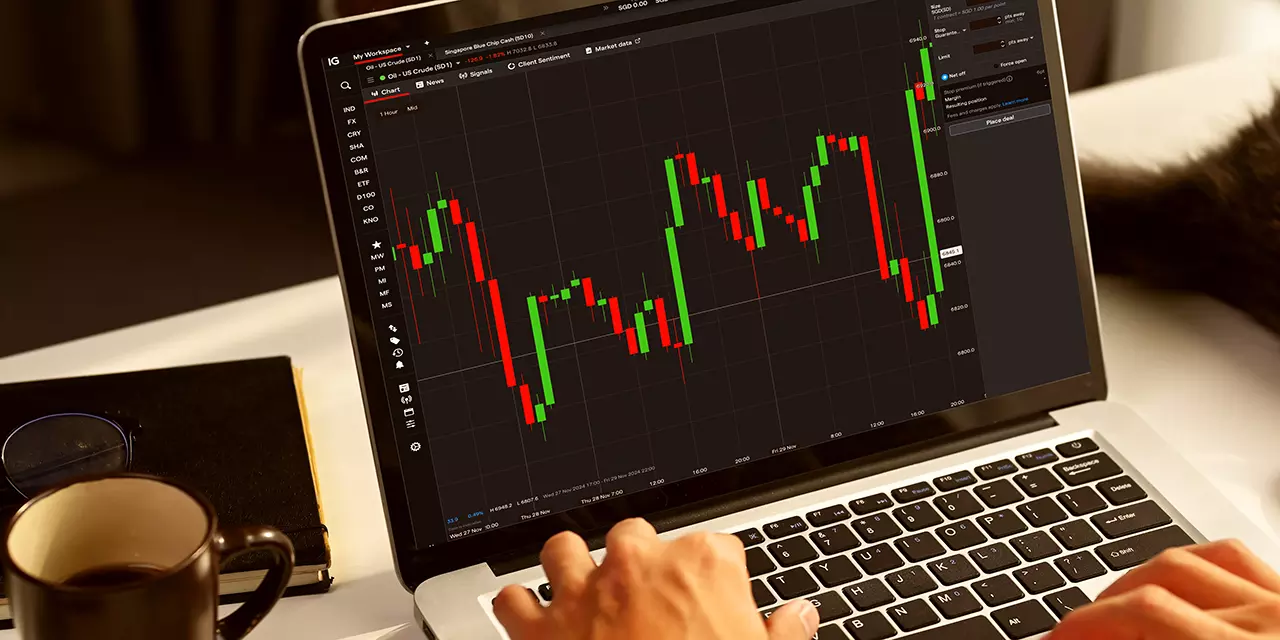
Retail traders have shown increasing interest in Contract for Difference (CFD) trading because this trading method provides them with flexible trading options while allowing them to use leverage to access worldwide financial markets. Traders need to grasp the concept of spreads because this element stands as one of the most important aspects of their work. Every trader must learn HOW TO CALCULATE SPREAD IN FOREX because this skill helps them make better trading choices that lead to successful outcomes. Your trading costs and entire trading experience depend on which CFD broker you choose as your trading partner.
What Is a Spread in Forex Trading?
The spread in Forex trading represents the difference between the bid price and the ask price which defines the selling and buying prices of a currency pair. This difference serves as the broker's trading fee that you must pay to execute your transaction.
The spread between the 1.1050 bid price and the 1.1052 ask price for EUR/USD creates a 2 pip spread. You automatically incur this expense with each transaction because market conditions must move in your favor by at least the spread value before you can make profits.
Importance of Choosing the BEST CFD BROKER
The choice of the BEST CFD BROKER carries great significance because various brokers present different spread options to their clients. Some brokers maintain tight spreads while other brokers offer wider spreads which become active during times of market instability.
A trustworthy broker provides clients with:
Competitive and low spreads
Transparent pricing
Fast execution speeds
Strong regulatory compliance
The market offers tighter spreads which benefit traders because these tighter spreads decrease their trading expenses thus helping scalpers and day traders who conduct several trades throughout the day.
Traders need to know how to calculate spreads because it helps them gain more insights into spread calculations. The formula is:
Spread = Ask Price – Bid Price
Let’s break it down with an example:
The GBP/USD spread calculation shows that the bid price of 1.3000 and the ask price of 1.3003 results in a spread of 1.3003 minus 1.3000 equals 0.0003 which equals 3 pips.
Most trading platforms display spreads by default but traders can benefit from learning to calculate spreads because it helps them verify costs and compare different brokers.
Types of Spreads Offered by Brokers
Brokers offer various spread types which traders must select according to their individual trading methods.
Fixed Spreads
Fixed spreads maintain their value throughout all market conditions. Beginners find these trading costs easy to forecast which makes them a suitable choice for their needs.
Variable (Floating) Spreads
Variable spreads change according to market conditions because they depend on both market volatility and liquidity fluctuations. Spreads experience significant widening during important news events. Spreads maintain tighter ranges during standard market operations.
The BEST CFD BROKER often offers both options, allowing traders to choose based on their strategy.
The trading profitability of your operations will decrease when your spreads increase because they create higher trading expenses. The market costs create an obstacle to your profits because they lead to wider spreads. The market costs create an advantage for you because they lead to narrower spreads.
For example:
Your net profit becomes 3 pips because your trade increases by 5 pips and the spread costs 2 pips.
Your profit drops to 1 pip when the spread reaches 4 pips.
The calculation of spread values in forex trading shows its importance because it determines which trades to execute.
Factors That Influence Spreads
The size of forex trading spreads depends on multiple factors. Market Liquidity Highly liquid pairs like EUR/USD usually have tighter spreads because exotic pairs display wider spread patterns. Market Volatility During major economic announcements or geopolitical events spreads tend to widen because of increased uncertainty. Trading Sessions The London-New York session serves as a major market overlap which results in lower spread costs. Broker Type ECN brokers usually provide tighter spreads than market makers which makes them the most popular option among traders who want the best CFD broker. Tips for Managing Spread Costs To enhance your trading results use these following recommendations. Trade during high liquidity hours to get tighter spreads. Traders should trade only when necessary because they should avoid trading during major news events. Brokers should be compared before account creation. The testing of spread behavior should be done through demo accounts. The implementation of these strategies helps you reduce unneeded expenses while you attain better trading results.
Conclusion
The process of learning about spreads represents an essential requirement for achieving success in forex trading. The calculation method for forex spread needs to be learned by traders because it helps them control expenses and make better choices. The selection of the top CFD brokerage company provides traders with competitive spreads and dependable execution services together with an improved trading process. The process of learning these concepts helps traders make more money while developing their ability to handle the changing field of CFD trading.